


TOPICS & CATEGORIES

By Cassidy Mills, Staff Writer
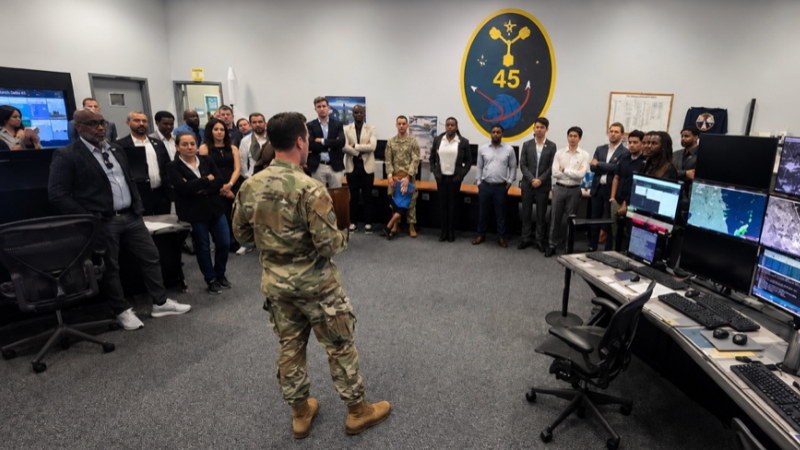
Air Force Col. Anthony Graham, commander of the Air Force Agency for Modeling and Simulation (AFAMS) presented “Improving Interoperability Within the Air Force” at the Institute for Defense and Government Advancement (IDGA) Military Land Forces Summit, Feb. 26.
IGDA’s two-day summit gathered over 300 senior training commanders, procurement officers and acquisitions leaders from across the military and provided a forum for networking and collaboration. This conference focused on training warfighters with simulation and synthetic training, and it explored how militaries (American and allied) are approaching interoperability with new technology and moving toward competency training.
AFAMS is military, civilian and contractor modeling and simulation experts (M&S) experts charged with driving innovation and interoperability, enabling warfighters to maximize performance, improve decision-making skills and build effective strategies. Their goal is to transform M&S for warfighter training and readiness to meet future operational needs through leadership and innovation. Graham emphasized the importance of M&S from a warfighting perspective and how it can enhance interoperability.
He also noted that training devices of various configurations constantly face the threat of cyberattacks.
“Our warfighters need higher fidelity, greater interoperability and more effective training than ever before,” Graham said. “They need to be able to train together like we fight to communicate seamlessly and respond to threats in real time.”
Graham said the inconsistent standards across training devices are limiting the Air Force’s ability to provide the training warfighters need to successfully face future challenges. The ability for different systems and devices to work together seamlessly in real-world scenarios is crucial for modern training simulations.
AFAMS mandates that training platforms be concurrent, meaning they must accurately reflect the latest iteration of the operational systems they emulate. The training environment must provide a consistent, high-fidelity representation of the platform’s performance and behavior, ensuring alignment with the current configuration and capabilities of the systems in use.
“We need to ensure that the training scenarios are robust, diverse and easily modifiable to reflect changes in operational needs,” Graham said. “It’s essential to have hardware and software that are interoperable and can be seamlessly shared across different platforms and devices.”
The call for improved interoperability is not just about keeping pace with technological advances but about preparing warfighters for a future where multidomain operations are the norm. Graham stressed that AFAMS’ efforts are a key to ensuring that the Air Force remains at the forefront of training readiness, allowing for the most effective use of M&S to face the challenges of modern and future warfare.
People who read this article also found these articles interesting :




INDUSTRY NEWS


