


TOPICS & CATEGORIES

By Cassidy Mills, Staff Writer
October 29, 2025
The National Center for Simulation (NCS) held its annual Hall of Fame ceremony Oct. 28 at the Orange County Convention Center, recognizing Elizabeth Baron and the late Walter Chambers for their contributions to the field of modeling, simulation and training (MS&T).
Established in 2014 through a partnership between NCS and Orange County Government — including the Office of the Mayor and the Orange County Convention Center — the NCS Modeling and Simulation Hall of Fame honors outstanding members of the MS&T community each year.
George Cheros, NCS CEO, opened the ceremony by noting the significance of the Hall of Fame ceremony in recognizing the innovators whose work transformed the industry.
“This Hall of Fame was established to recognize the pioneers in our field whose passion, dedication and perseverance laid the foundations for today’s multibillion-dollar simulation industry,” Cheros said. “Those recognized developed tools and training systems that have enabled our warfighters to prepare for nearly any situation imaginable.”
Neal Finkelstein, Ph.D., NCS chief operating officer, emceed the event and introduced speakers throughout the evening’s ceremony. Finkelstein said the Hall of Fame reflects not just the achievements of the inductees, but also the support of the broader community whose collaboration and dedication helped make their successes possible.
“The progress we celebrate tonight in the Hall of Fame is the result of countless teams of visionaries, innovators and supporters working together to push the boundaries of what is possible,” Finkelstein said. “As you hear the journeys of our inductees, you’ll notice one common thread: behind each of them were high-performing teams whose dedication and expertise made these achievements possible.”
Baron was introduced by longtime colleague Carolina Cruz-Neira, Ph.D., interim director of the University of Central Florida’s Institute for Simulation and Training (IST) and executive director of the Pegasus Research Institute, who was inducted into the NCS Modeling and Simulation Hall of Fame in 2024.
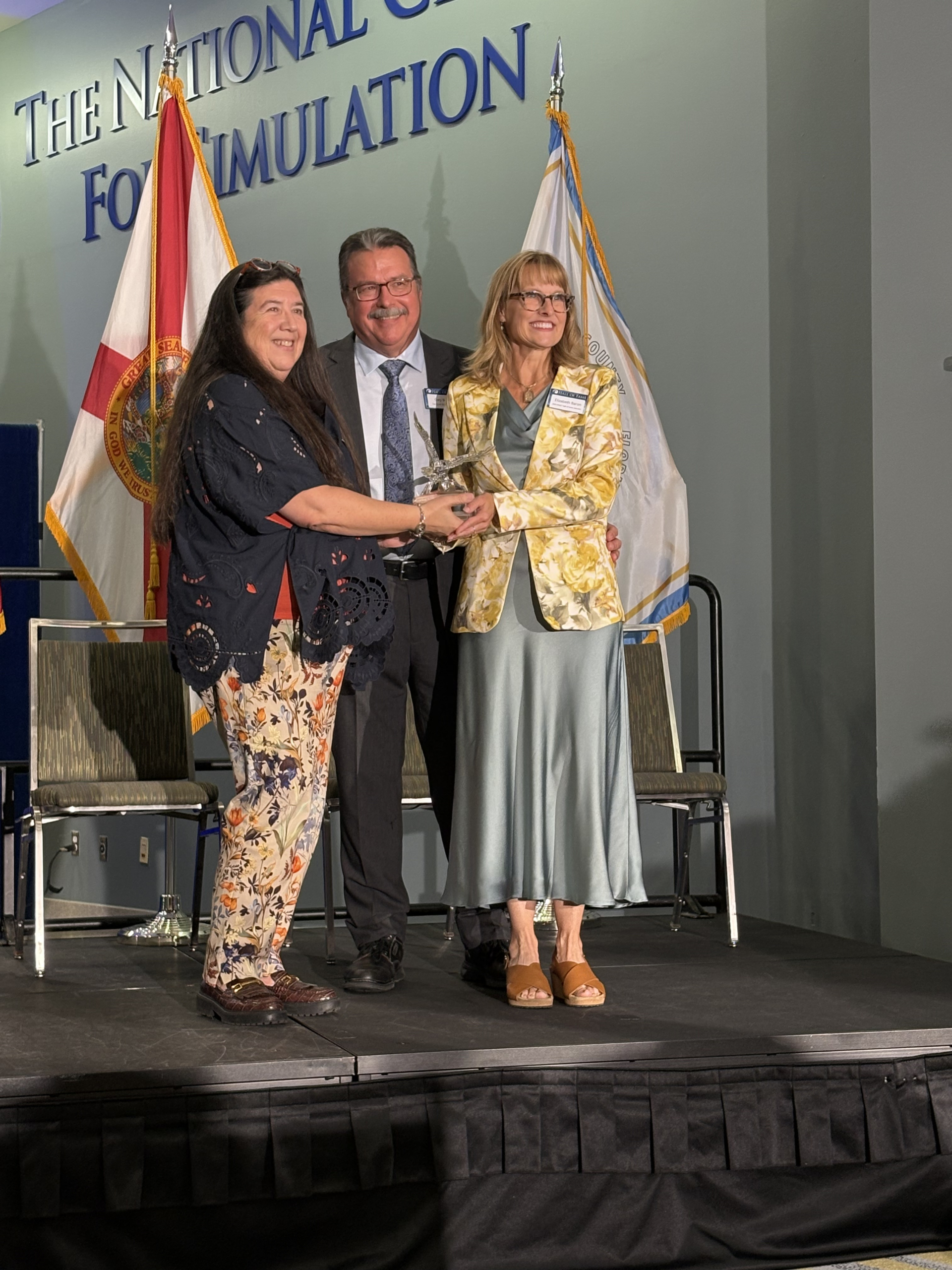
“I have the honor of introducing someone who has been a role model to me, a colleague I have learned from and a friend I have cherished for many years,” Cruz-Neira said. “She has transformed the industry by pioneering immersive simulation in the automotive sector, laying the foundation for what is now recognized as digital twins.”
Baron is recognized for her contributions to immersive technology and the use of virtual reality in automotive design and engineering. During her three decades at Ford Motor Company, she served as the company’s first virtual reality technical specialist and led the development of the Ford Immersive Vehicle Environment (FiVE), a system that integrated simulation into the vehicle design process.
“My philosophy has always been one of technical creativity, focusing on the technical aspects of things and applying technology and modeling and simulation in innovative ways,” Baron said. “Even before it was called a digital twin, I worked on using the same data to engage diverse groups of people with different perspectives to simulate and explore together.”
Her work advanced digital twin methodologies, improving collaboration and evaluation across global engineering teams. Baron later founded Immersionary Enterprises and joined Unity Technologies, where she focused on enterprise solution architecture and the application of extended reality in sectors such as aerospace, healthcare and manufacturing.
“Simulations allow people to understand complex ideas, even when it’s outside their usual mindset, and that is where the magic happens,” Baron said. “Going forward, my goal is to honor this award, which I am still so overwhelmed to receive, by continuing to do my best to make that magic happen.”
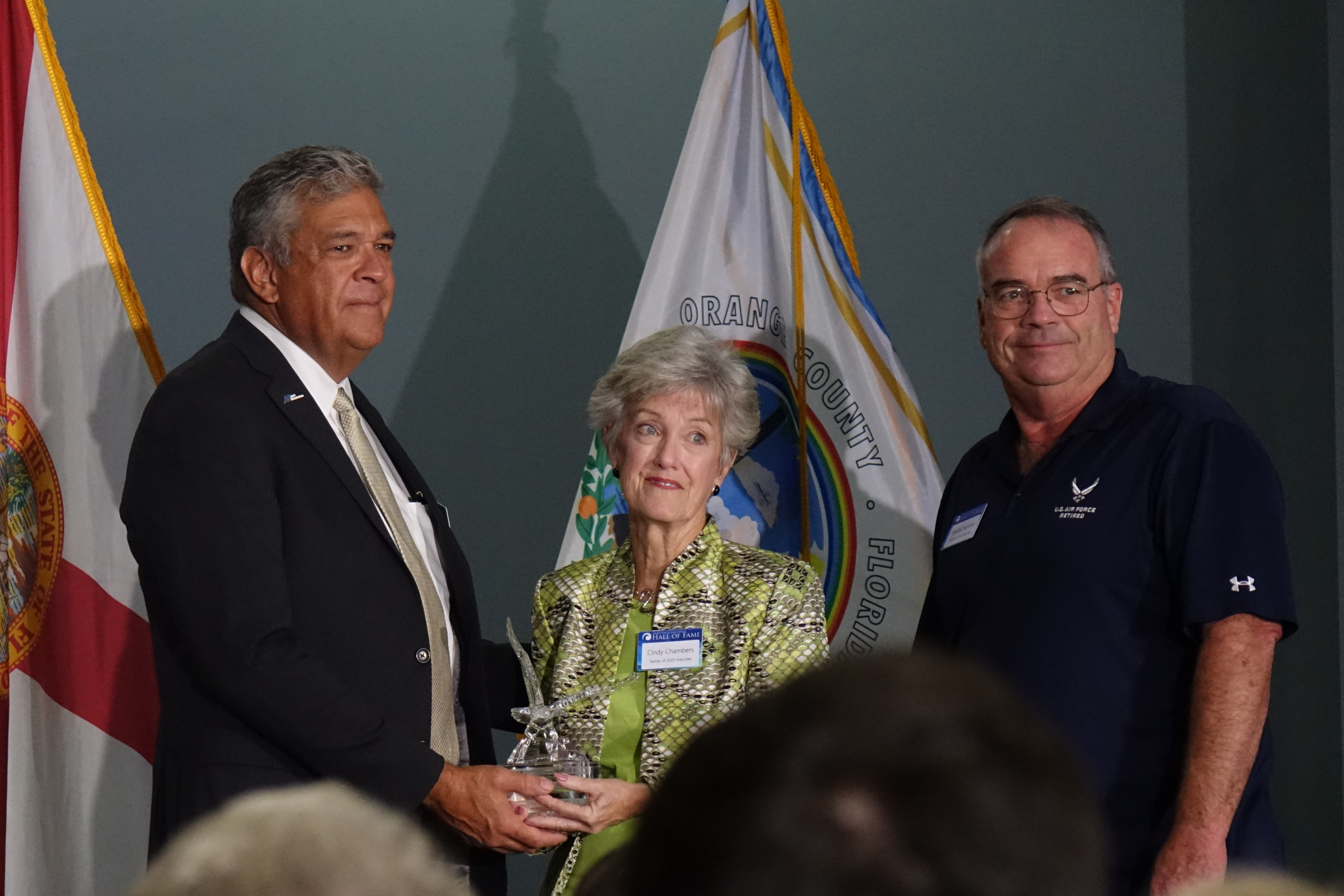
Chamber’s induction was presented by Robert Abascal, founder and chief strategy officer of AVT Simulations. Abascal also introduced Chambers’ wife, Cindy, and his son, David, who attended the event and accepted the honor on his behalf.
“It’s both a privilege and deeply emotional moment to present the late Walt Chambers for induction to the National Center for Simulation Modeling and Simulation Hall of Fame,” Abascal said. “Tonight, we celebrate a life defined by service, innovation and a lifelong dedication to advancing the field of modeling and simulation.”
Chambers’ career in MS&T spanned more than six decades, during which he contributed to military training technologies. He served as chief scientist at AVT Simulation beginning in 2007, working on projects such as the Virtual Technology Research Simulator (VRTS). In 1984, he received the AIAA DeFlorez National Award for his work on the VRTS.
“Walt helped create the early frameworks that made simulation-based training possible,” Abascal said. “He worked tirelessly to enhance realism for military aircrew and warfighters, developing new methods for optical alignment, display calibration and image fidelity — innovations that evolved into industry standards still in use today.”
Chambers’ research, which included two patents, contributed to the evolution of training platforms still used today. His work with the Department of Defense included Navy simulation research, U.S. Air Force chip design and Army engineering management. He also participated in NATO and The Technical Cooperation Program (TTCP), coordinating research and technology exchange among allied nations.
“His life’s work helped ensure that those who served our nation are better trained, better prepared and safer because of the systems he helped create,” Abascal said. “He would always thank the team around him before ever taking credit himself, but those of us who had the privilege of working alongside him know the truth.”
People who read this article also found these articles interesting :


INDUSTRY NEWS


